
Get it wrong, and you'll face frequent replacements, wasted instructional time, and real safety risk in a shared gym. NASP now reaches 1.2 million students across 9,535 schools in a given year, according to a Wisconsin DNR overview of the program. That scale means more arrows, more shooting sessions, and more pressure on every target you buy.
This guide breaks down what actually makes a target NASP-ready, and what to weigh before you spend your equipment budget.
Key Takeaways
- Match NASP size, safety, and durability standards so targets hold up to daily classroom use
- Easy arrow removal and rebuildable designs cut class downtime and replacement costs
- Prioritize durability, NASP compliance, portability, and total cost of ownership
- Morrell® Targets is an official NASP supplier building durable, USA-made targets for school programs
What Are NASP Targets?
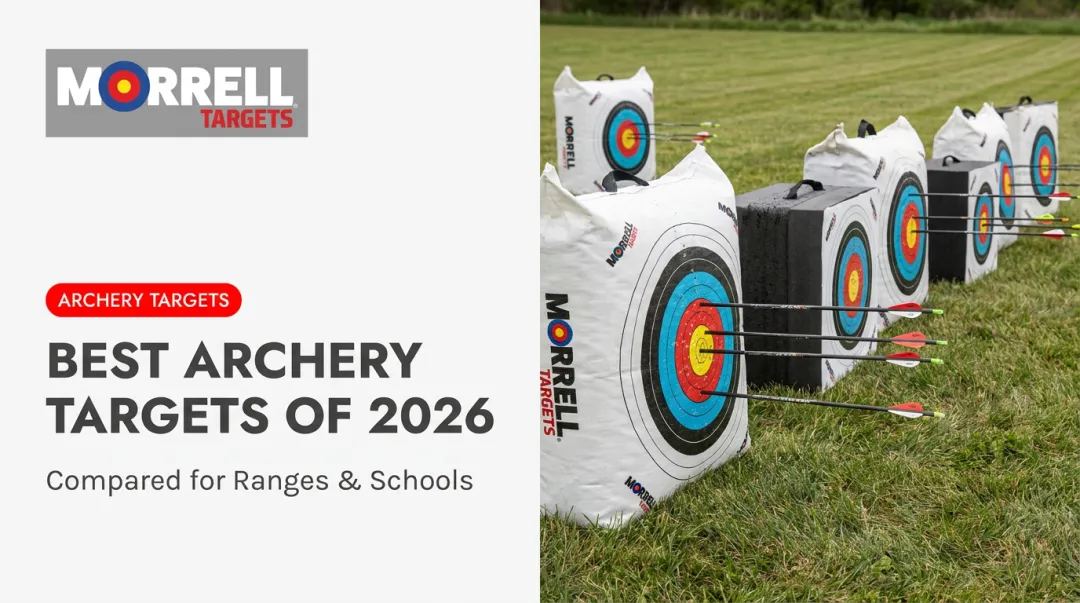
A NASP target is any bag target, target face, or backstop system built to match National Archery in the Schools Program specifications for classroom instruction and tournament play. That includes:
- Bag targets designed for repeated field-point shooting by grades 4-12
- NASP-standard target faces, sized and scored to tournament rules
- Portable backstop or stand systems that hold up in gyms, cafeterias, and multipurpose rooms
Core Components of NASP-Compliant Targets
Three parts determine whether a target actually performs in a school setting.
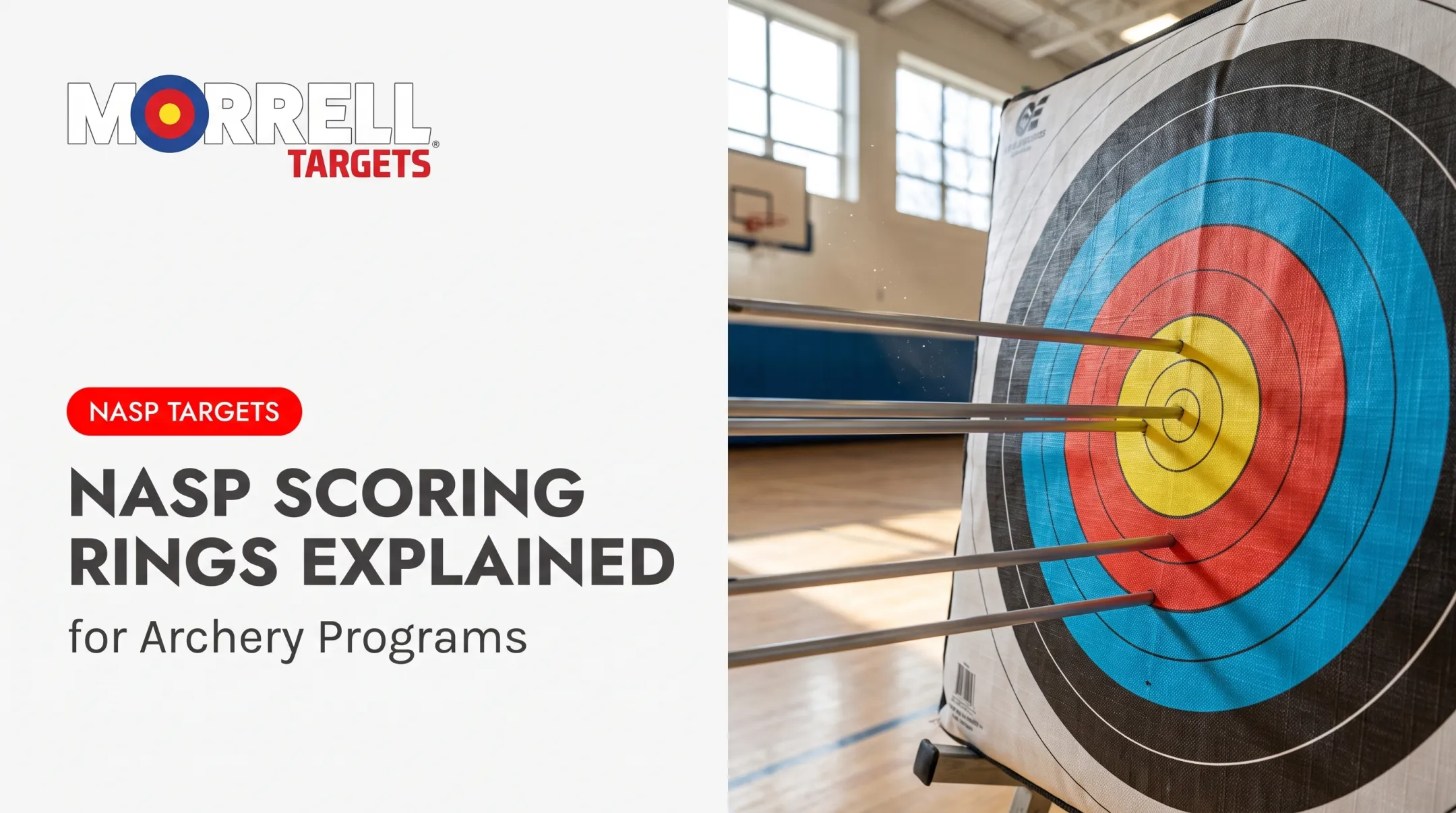
Target face. NASP uses a standardized scoring face so that a bullseye in one gym counts the same as a bullseye at state finals. Consistency here matters for fair practice scoring and legitimate tournament results.
Target core or bag material. The density of the foam or bag core decides whether an arrow stops cleanly or punches through into a wall, a bleacher, or a hallway. This is the single most important safety variable in a shared facility.
Frame or stand system. An internal frame keeps the target upright through hundreds of shots per class and thousands per semester. Without one, targets tip, lean, or collapse mid-session.

Why Component Quality Matters for Schools
A single PE class can fire hundreds of arrows in one period. Multiply that across a full semester, and a mediocre target degrades fast.
Weak components mean more replacements, tighter budgets, and less class time for actual instruction. Durable components keep a program running from September to May without constant downtime.
Benefits of Quality NASP Targets for Schools
A well-built target pays off in ways that go beyond avoiding a mid-semester replacement order.
- Fewer replacements across the school year, which protects tight equipment budgets
- A safer shooting environment, with consistent stopping power that reduces pass-through risk
- Consistent scoring for both daily practice and tournament prep
- Longer usable lifespan, often stretched further with replacement covers instead of full replacements
Reliable equipment also supports the program outcomes schools care about. NASP's 2024 student survey of 7,572 participants found that 68% felt more connected to school and 34% said the program made them work harder in class.
Those are self-reported outcomes, not proof that better targets cause better grades. But they show what's at stake when equipment failures interrupt the program these students are responding to.
Durable targets add a practical instructional benefit too: they don't need mid-class repairs or swaps, so teachers keep more shooting time and less downtime between rotations.
What to Consider When Choosing NASP Targets for Your School
PE teachers, athletic directors, and coaches all weigh the same core question: does this target match our class size, our budget cycle, and our safety requirements? These six factors answer that.
Durability and Shot Capacity
School targets take a beating that backyard targets never see. A single class can rotate 20-30 students through one target in a 45-minute period.
- Targets need to withstand thousands of arrow impacts per year without losing stopping power
- Track replacement frequency and annual equipment cost per class as your core KPI
- Layered bag construction (built from dozens or even hundreds of material layers) tends to outlast basic foam cores
Easy Arrow Removal
Snag-free, low-friction bag material speeds up retrieval between rounds, and that adds up fast across a class period.
- Faster removal means more instructional time saved per class
- It also reduces arrow shaft damage from targets that grip too tightly
- Matching practice-tip size to arrow shaft diameter improves removal ease further
Size and NASP Compliance
Tournament eligibility depends on exact specifications, not close approximations. Current NASP rules call for an 80 cm target face with 10 scoring rings, shot from 10 meters and 15 meters, according to the 2026 NASP national rulebook.
- Practice targets should match this sizing so students train under real tournament conditions
- Non-compliant faces leave student archers unprepared for sanctioned events
- Confirm face size before ordering. An undersized face won't qualify for sanctioned events

Portability and Storage
Most school archery programs share gym space with other classes and activities, so targets need to move easily.
- Lightweight, wheeled designs cut setup and teardown time between periods
- Side straps and non-skid wheels help with repositioning mid-class
- Outdoor field use adds weather resistance to the requirements list
Safety and Backstop Reliability
Consistent stopping power is the difference between a routine class and an incident report.
- Reliable backstops reduce pass-through risk in shared facilities
- Fewer incidents mean lower liability exposure for the school
- Field-point-only design (standard for NASP) simplifies the safety equation compared to broadhead-rated targets
Budget and Total Cost of Ownership
Buying a new target every season adds up fast. Rebuildable targets with replaceable covers change that math.
Consider one real example:
- Full replacement target: around $274.99
- Replacement cover for the same frame: $31.99
- Savings per refresh: roughly 88%
Over two seasons, cover-only refreshes save about $243 per target. Over three seasons, that climbs to roughly $486. Track cost per student over the life of the program, not just sticker price.
How Morrell® Targets Can Help
Morrell® Targets has built archery targets since 1986. Morrell targets are the official targets used at NASP state and national tournaments, and the company holds Gold Medal-level NASP sponsor status.
For schools, that relationship means purpose-built equipment:
- NASP Eternity School Target — 220 material layers, Internal Frame System (IFS), tilt-proof bar, roller wheels, and side straps for quick class-to-class moves. Rated for field points and bows of 50 pounds or less.
- NASP Youth Field Point Bag Target — a lighter entry-level option built for younger students, with IFS technology and two shooting sides for extended use.
- Youth Deluxe GX — supports a full 80 cm target face with field-point-only compatibility and the same IFS durability approach.
- Replacement covers — built to NASP specifications so schools can refurbish an existing frame instead of buying new equipment each season.
Every option is Made in the USA, with a design focus on easy arrow removal and long service life. Morrell has also been voted #1 in consumer and dealer surveys for more than 20 consecutive years, on the same durability and support priorities that matter when a school is managing a tight equipment budget.

Conclusion
The right NASP target for your school matches your class size, budget cycle, and safety requirements this season—not the model that simply shows up most often on a shopping list.
Durability, easy arrow removal, and NASP compliance determine whether a target lasts one semester or several years. Revisit your inventory every season. Enrollment shifts and class sizes change, so last year's setup may not fit this year's program.
Frequently Asked Questions
Which schools offer archery programs?
Thousands of U.S. public, private, and homeschool-affiliated schools participate in NASP across grades 4-12. Schools interested in joining can find local programs and requirements through their state NASP coordinator.
What is the best age to start archery?
NASP is built for students in grades 4 through 12, using equipment and instruction designed to fit that range. The program doesn't set a specific chronological age minimum, focusing instead on grade level.
What is a good training program for archery in schools?
The NASP curriculum, taught by a Basic Archery Instructor (BAI)-certified teacher or volunteer, is the standard school program. BAI training covers safety, range setup, and coaching in an 8-hour in-person course or a hybrid online-plus-range format.
Which schools offer archery scholarships?
Some colleges offer archery scholarships or roster spots to students with strong NASP or competitive backgrounds, though programs vary by school. Check directly with individual college archery programs for availability and requirements.
What size targets do schools need for NASP archery?
NASP specifies an 80 cm target face with 10 scoring rings, shot from 10 meters and 15 meters for both classroom practice and tournament settings. Confirm your target face matches this sizing before competition season.
How many targets does a school need to run an archery program?
Plan on one target per small shooting group so rotations stay efficient. Add targets if class size is large or periods are short and lanes start bottlenecking.