

Introduction
Every archer knows the moment: you walk up to the target, grab the shaft, and pull. Nothing happens. You yank harder. The arrow bends, your hand slips, and now you're nursing a sore palm instead of shooting your next end.
"Easy arrow removal" is one of the top features archers look for in target reviews, and for good reason. How easily an arrow pulls free isn't random. It comes down to target material, arrow point type, weather conditions, and technique.
This guide walks through the safest removal method step by step. It also explains what actually makes arrows stick versus slide free, and covers the mistakes that bend shafts and blister hands. Finally, it shows how to pick a target built for effortless pulls from the start.
Key Takeaways
- Always clear the area and pull straight back, never toward your body
- Foam density and layering drive removal difficulty more than any other factor
- Cold weather, broadheads, and tight shot groupings all increase pull resistance
- The right arrow puller and an easy-removal target design solve most stuck-arrow problems
How to Remove Arrows From an Archery Target the Right Way
Getting arrows out safely isn't complicated, but it does require sequence and technique. Skip a step, and you risk a bent shaft, a snapped nock, or worse, an arrow that flies backward toward someone standing too close.
Step 1: Clear the Area and Check Your Surroundings
Before touching a single arrow, confirm the range is clear. The Oregon Department of Fish and Wildlife's archery range rules specify that retrieval should only happen after everyone has finished shooting, and nobody should stand directly behind the person pulling.
A freed arrow can snap backward unexpectedly. Pull the easy arrows first. Leave stubborn, deeply embedded ones for last so the target stays stable while you work on the tougher pulls.
Step 2: Get a Secure Grip Close to the Target Face
Grip the shaft as close to the target surface as possible. This distributes pulling force along more of the arrow instead of concentrating stress at one point, which is what causes bends and cracks.
In cold weather or with deeply set arrows, bare-hand grip often isn't enough. Consider:
- A rubber grip pad or jar-opener material for added friction
- A dedicated arrow puller designed to grip without slipping
- Bracing your other hand flat against the target face for leverage
Step 3: Pull Straight and Steady, Away From the Body
Brace one hand against the target. With the other, pull the arrow straight out in a smooth, steady motion, and keep your body clear of the path.
Never twist a carbon arrow to loosen it. Arrow puller tools are designed specifically to eliminate hand-twisting, since unnecessary torque adds stress to the shaft. Straight, steady force is safer for the arrow and for you.
Step 4: Inspect the Arrow and the Target After Removal
Once the arrow is out, check it before nocking it again:
- Flex the shaft gently and listen for cracking sounds, a standard step in most carbon arrow inspection guidelines
- Check the nock for hairline cracks or looseness
- Look at the point for bending or thread damage
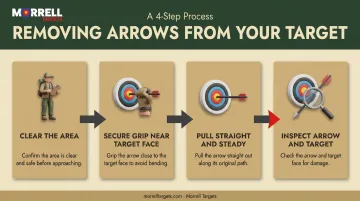
Then glance at the target itself. A growing hole or thinning foam patch means it's time to redirect your shots to a fresher section of the target face. If the whole face is worn out, a replacement cover, like the options Morrell offers for its bag targets, restores a full shooting surface without the cost of a new target.
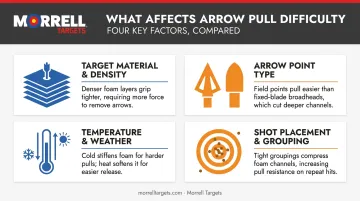
Key Factors That Affect How Easily Arrows Come Out
Arrow removal difficulty comes down to a handful of variables you can mostly control. None of it is luck.
Target Material and Density
Not all targets grip arrows the same way. Archery360 distinguishes between woven-shell bag targets filled with stopping material and plastic-foam targets, which are either solid-poured or built from stacked, compressed foam layers.
A few things worth knowing:
- Density and firmness aren't the same thing. According to the Polyurethane Foam Association, high-density foam can still feel soft, while low-density foam can feel firm. Density affects durability more than it dictates pull resistance on its own.
- Self-healing foam balances stopping power with easier pulls better than basic layered foam, which compresses and hardens with repeated use. Morrell's High Roller Foam and MLDD (Multi-Layered Density Design) targets are built around this same self-healing principle.
- Compression settings matter. Some layered-foam designs use adjustable compression specifically so arrows stop reliably but still come out without excessive force.
Arrow Point Type
Field points generally slide out more easily than fixed-blade broadheads, which cut fibers going in and can grip them coming out. That's why manufacturers build separate target categories for each: bag targets for field points, denser foam for broadhead-rated use.
Oversized outserts or external collars add another wrinkle. Nock On Archery notes that an external collar's lip can catch internal cloth or netting inside a bag target, creating extra resistance on the pull. If you're running components wider than your shaft, expect a tighter grip.
Temperature and Weather Conditions
Shooting outdoors in January feels different than in July, and your target notices too. A materials science review published in PMC found that polyurethane foam generally stiffens and loses ductility as temperatures drop, though the exact effect depends on the foam's formulation and density.
Translated to the archery range: expect arrows to pull harder in cold weather. Indoor ranges mostly sidestep this problem, since heated buildings keep foam pliable regardless of the season.
Keep an arrow puller in your bag through winter months and budget extra time for retrieval when shooting outdoors.
Shot Placement and Grouping
Tight groups look great on paper, but they compact the foam or fill around each arrow, making every subsequent pull harder. FeraDyne's BLOCK target guidance recommends spreading shots across all available points and shootable sides to extend target life.
On a target with four or six shooting faces, rotating sides every 20-30 shots prevents any single spot from taking excessive punishment. Spreading your aim points this way keeps material loose, extends the target's usable life, and keeps arrows coming out easier shot after shot.
Common Mistakes and How to Troubleshoot a Stuck Arrow
Even experienced archers fall into bad habits that make removal harder than it needs to be.
Common Mistakes to Avoid
- Pulling at an angle instead of straight back, which bends shafts and stretches the entry hole
- Yanking bare-handed on a deeply embedded arrow instead of reaching for a puller, risking blisters or a cracked nock
- Leaving broken points or fragments embedded in the target, where future arrows strike them and cause more damage
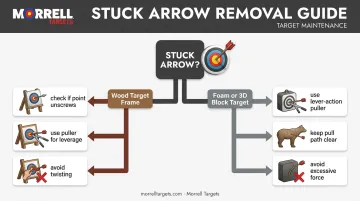
Cutting out these habits eliminates most extraction headaches before they start. Even careful archers occasionally face an arrow that won't budge, though. When that happens, the right fix depends on what it's stuck in: wood, foam, or a 3D target's core.
Troubleshooting Stuck Arrows
Problem: An arrow won't budge from a wood target frame.
This usually means the arrow has driven deep into dense grain. First, check whether the field point can be unscrewed from the shaft, freeing the shaft without fighting the wood's grip. If it's still stuck, use a dedicated puller for extra leverage rather than twisting or forcing it, which can snap a carbon shaft. Wood frames behave very differently from foam, so techniques safe for foam bales shouldn't be applied here.
Problem: An arrow is stuck deep in a 3D or foam block target.
This typically happens with broadheads or high-speed shots into compressed foam. A lever-action or perpendicular-grip puller adds mechanical leverage for exactly this situation: stubborn pulls from stiff, cold, or compressed target material. Keep the pull path clear before applying force.
Tools and Targets Built for Effortless Arrow Removal
Technique only goes so far. The right accessories and target design solve most stuck-arrow frustration before it starts.
Arrow pullers come in a few proven styles:
- Flat grip pads made from tacky, non-slip material
- Full wraparound cylinder grips for control and comfort
- Solid rubber hand grips that work across arrow sizes
- Lever-and-jaw mechanical pullers built for stubborn, cold-weather pulls
This exact problem is what started Morrell Targets in the first place. Founder Dale Morrell built his first bag target in his garage in the mid-1980s, working as a brick mason with a simple goal: a target that offered both easy arrow removal and durability.
That philosophy still runs through Morrell's current lineup. Its High Roller Foam targets use solid-poured, self-healing foam that recovers after penetration and stays easier to pull, shot after shot.
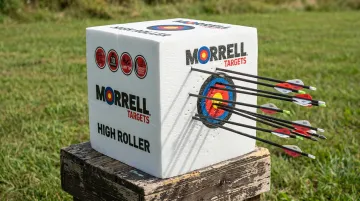
When shopping for a target, if effortless pulls matter to you:
- Look for products explicitly marketed with self-healing or engineered foam
- Avoid heavily compacted, budget layered foam if you shoot frequently
- Match the target to your point type. Field-point-only targets aren't built to handle broadheads and shouldn't be forced to
Conclusion
Safe, easy arrow removal depends on correct technique, knowing what makes a target grip or release arrows, and having the right tools on hand. Clear the area, pull straight, and inspect both arrow and target afterward.
Most stuck-arrow frustration is preventable. Spread your shots and account for cold weather, then invest in a target engineered for the pull, not just the stop. Morrell's Internal Frame System and MLDD foam are built for that release, shot after shot.
Frequently Asked Questions
Why are my arrows hard to pull out of the target?
Dense foam, broadhead points, cold weather, and tightly grouped shots are the most common causes. Each factor compacts material or increases grip around the shaft.
How do you remove arrows without damaging them?
Grip the shaft close to the target face and pull straight back with steady pressure. Use an arrow puller instead of a bare-hand yank whenever the arrow feels deeply set.
What is the safest way to pull a stuck arrow?
Confirm nobody is standing behind or beside you, then pull the arrow straight out and away from your body in one steady motion.
Does cold weather affect arrow removal?
Yes. Cold temperatures stiffen foam and bag fill, making arrows noticeably harder to pull. Keep a puller tool handy during winter months.
Do field points and broadheads require different removal techniques?
Field points generally slide out with less effort. Broadheads cut and grip material going in and coming out, so they often need more careful, straight-line pulling force.
What type of target offers the easiest arrow removal?
Well-designed bag targets and self-healing foam blocks, such as Morrell's High Roller Foam and MLDD bag targets, offer smoother removal than dense, compacted layered foam.