Introduction
Picture an archer at full draw, arms trembling slightly from tension, eyes locked on a target 70 meters away. The whole face is roughly the size of a bicycle wheel.
The ring that separates a medal from a memory? Smaller than a coffee coaster.
That single shot carries the weight of four years of training.
Archery has held a permanent spot on the Summer Olympic program since 1972, and elite competitors now come from more than 150 countries to chase a spot in it. This guide breaks down the rules, gear, target specs, and scoring system that define Olympic target archery. It also covers how everyday archers can bring that same discipline into their own backyard practice.
Key Takeaways
- Uses recurve bows only, shot at a fixed 70-meter distance on a 122cm target face
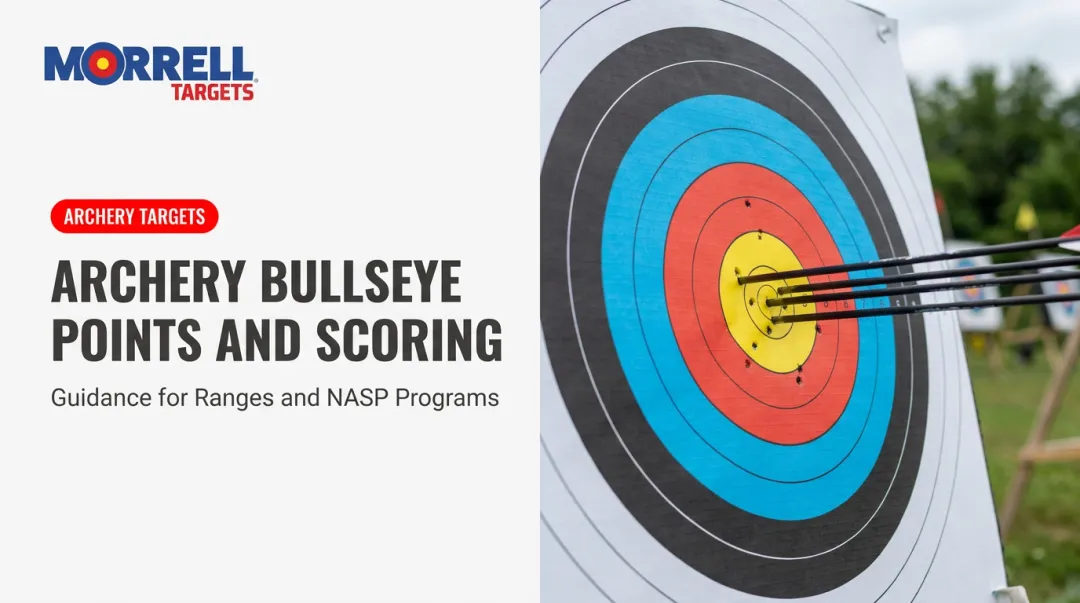
- Scores the gold bullseye at 10 points, dropping ring by ring to white (1-2 points)
- Runs a 72-arrow qualification round, followed by single-elimination matchplay using a set system
- Debuted at Paris 1900, vanished for 52 years, then returned permanently at Munich 1972
What Is Olympic Target Archery?
Target archery is the practice of shooting a set number of arrows at a stationary, multi-colored circular target from a fixed distance. It's the only archery discipline featured at the Olympic Games, which sets it apart from the dozen or so archery formats practiced worldwide.
The sport's rules come from World Archery, founded on September 4, 1931, in Lwow, Poland (now Lviv, Ukraine), originally under the name Fédération Internationale de Tir à l'Arc, or FITA. It's the international federation governing Olympic and Paralympic archery, and every rule discussed in this article traces back to its rulebook.
Target Archery vs. Its Sister Disciplines
Not every archery format looks like what you see at the Olympics. A few close relatives illustrate the difference:
- Indoor archery — shot at 18 meters on a 40cm face, built for tight indoor ranges
- Field archery — shot across natural terrain at uneven, varying distances (10-60 meters for recurve), closer to a hiking trail than a stadium
- 3D archery — shot at life-sized foam animal targets across unmarked, varying distances, testing range estimation as much as raw accuracy
Outdoor target archery, with its fixed distance and standardized target, is what makes the sport fair to score and simple to broadcast. That's exactly why it became the Olympic standard.
History of Archery at the Olympics
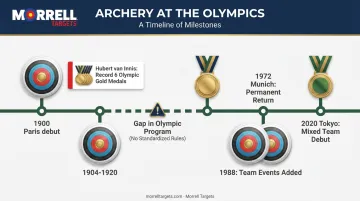
Archery's Olympic story is anything but linear. It debuted at Paris 1900, then popped up again in 1904, 1908, and 1920 before disappearing entirely.
Why the gap? International rules weren't standardized yet, and different host nations used different formats. That made consistent scoring across Games nearly impossible.
Once World Archery locked in a unified rulebook, the sport returned for good at Munich 1972, a comeback that followed a 52-year absence. From there, the program expanded:
- 1988: Men's and women's team events added
- 2020 (Tokyo): Mixed team event makes its Olympic debut
One name dominates the sport's record books: Belgium's Hubert van Innis, who won six gold and three silver medals across the 1900 and 1920 Games. Nobody in Olympic archery history has matched that haul.
Olympic Archery Equipment: The Recurve Bow
Through Paris 2024, recurve is the only bow type permitted in Olympic competition. Compound bows, despite being more forgiving for accuracy, remain excluded from the Games (more on that shift below).
A recurve bow's limb tips curve away from the archer, storing and releasing energy at the shot. The core setup includes:
- Riser — the central handle section
- Limbs — flexible arms that store and transfer energy
- Sight — a single sighting point, with no magnification, prism, or electronic components allowed
- Stabilizer rods — balance the bow and dampen vibration
- Clicker — a small draw-check device that helps archers repeat the exact same draw length shot after shot
Finger tabs and arm guards round out the standard kit, protecting archers from string slap and blister-inducing repetition.
One important update: compound archery isn't permanently locked out of the Olympics. The IOC approved a compound mixed team event for LA28, so "recurve-only" describes Paris 2024 and earlier, not a rule set in stone forever.
Olympic Target Size, Scoring & Distance
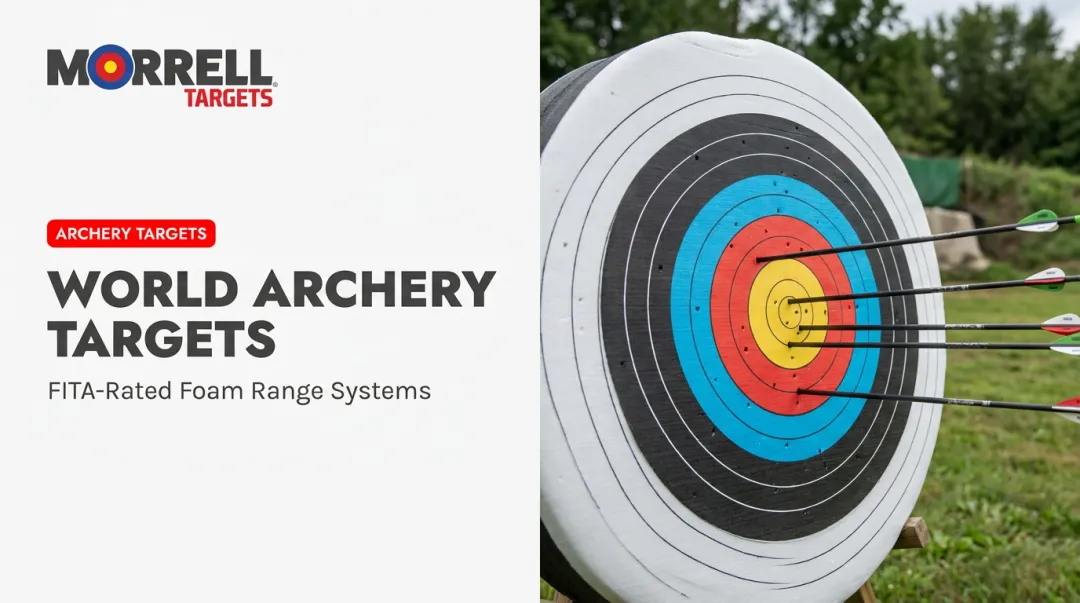
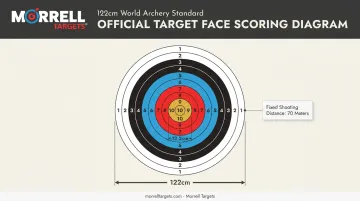
Here's the direct answer: Olympic recurve target faces measure 122cm in diameter, shot from a fixed 70-meter distance. That standard applies across individual, team, and mixed team events alike.
Scoring Rings, Outside to Center
| Ring Color | Point Value | Notes |
|---|---|---|
| White | 1-2 | Outermost rings |
| Black | 3-4 | |
| Blue | 5-6 | |
| Red | 7-8 | |
| Gold | 9-10 | Bullseye (10-ring) is 12.2cm across |
To put that in perspective: the entire target face is exactly 10 times wider than the bullseye ring archers are aiming for. From 70 meters, that gold circle appears smaller than a dinner plate held at arm's length.
This 70-meter format replaced the older 1440/FITA round, adopted in 1955, where archers shot at multiple distances ranging from 30 to 90 meters across 144 total arrows. The single-distance 72-arrow format became the standard qualification round in 2013, simplifying the sport for both spectators and broadcasters.
A few scoring rules matter most:
- Miss = zero. Hitting the target backing but landing outside all scoring rings, or missing the target entirely, scores no points
- Line cutters win the higher value. If an arrow touches a dividing line between two rings, the archer gets the better score
- The clock is unforgiving. Archers get just 20 seconds to release each arrow during individual alternate shooting and all team rounds, including shoot-offs
That time pressure adds a mental dimension scoring numbers alone can't capture. Try holding a 45-pound draw steady while a countdown ticks in your peripheral vision.
How Olympic Archery Competitions Work
Olympic archery runs on a two-phase structure: a ranking round that seeds every athlete, followed by single-elimination matchplay.
Qualification Round
At Paris 2024, all 64 men and 64 women shot 72 arrows in 12 ends of six. Cumulative scores from that round determined bracket seeding, meaning the top-ranked archer faces the lowest-ranked archer in round one, and so on down the ladder.
Matchplay & the Set System
Once brackets are set, matches use a set system rather than straight cumulative scoring:
| Event Type | Arrows Per Set | Set Points to Win |
|---|---|---|
| Individual | 3 | 6 |
| Team (3-person) | 6 (two per archer) | 5 |
| Mixed Team | 4 (two per archer) | 5 |
A set win earns 2 points, a tie earns each side 1 point, and a loss earns 0. Whoever hits the win threshold first advances.
Tiebreaks get intense. In individual matches tied at 5-5, each archer shoots one arrow; closest to center wins. Team ties follow the same logic with multiple arrows compared in sequence. Semifinal winners shoot for gold, and losers shoot for bronze, using this exact same format.
Individual, Team & Mixed Team Events
National Olympic Committees (NOCs) qualify teams and individuals through World Championships, continental qualifiers, and world rankings. Team events, added in 1988, and mixed team events, added at Tokyo 2020, each adds a separate medal opportunity beyond the individual competition. That means three total golds are up for grabs per gender category at every Games.
Bringing Olympic Archery Practice Home
Few backyard archers will ever shoot at a full 70 meters. But replicating the discipline behind Olympic training, meaning tight scoring-ring accuracy and high daily arrow volume, calls for a target that can absorb serious repetition without falling apart.
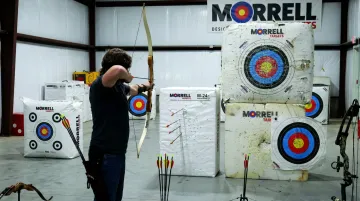
Recurve archers shooting target-style practice use field points exclusively, never broadheads, which matters when picking the right target. Morrell® Targets builds field-point-only targets designed for exactly this kind of repeated use:
- Easy arrow removal, so pulling shots doesn't turn into a workout
- Rebuildable designs with replacement covers, extending the life of a target well past its first season
- Commercial-grade range targets suited for clubs and indoor lanes running high shot volume day after day
Morrell has also served as a supplier to the National Archery in the Schools Program (NASP), putting durable targets in front of young archers building the fundamentals of the sport. A select few of those archers go on to compete at the Olympic level.
Whether you're stringing your first recurve bow or logging 100 arrows a day toward a competitive goal, the target behind the line matters just as much as the bow in your hands.
Frequently Asked Questions
What size is the target in Olympic archery?
The Olympic target face measures 122cm in diameter, with an innermost gold ring (the 10-ring) measuring just 12.2cm across. That's a 10:1 ratio between the full face and the bullseye.
How many points is the Olympic archery bullseye?
The innermost gold ring, the true bullseye, scores 10 points. The ring surrounding it, still part of the gold zone, scores 9 points.
How far away from the target do you stand in Olympic archery?
The standard Olympic distance is 70 meters for recurve archery, the only discipline currently featured at the Games.
What type of bow is used in Olympic archery?
Only recurve bows are permitted through Paris 2024. Compound bows compete in separate World Archery events and won't appear at the Olympics until a mixed team event debuts at LA28.
How many arrows do Olympic archers shoot in a qualification round?
Archers shoot 72 arrows, organized in 12 ends of six, to determine their seeding for the elimination bracket.
Is compound bow archery in the Olympics?
Not yet, though it already headlines the World Archery Championships and The World Games. LA28 will finally give compound its Olympic moment through a mixed team event.