Introduction
Every bowhunter knows the feeling: you finally pull out your broadheads for pre-season practice, and within a dozen shots, your bag target looks like it lost a fight with a weed eater.
Standard field-point targets aren't built for broadhead blades. They shred, arrows punch straight through, and you're left buying a replacement before opening day even arrives.
The Morrell Bone Collector Broadhead Target was built to solve exactly that problem. It's a purpose-made target designed specifically for fixed and mechanical broadhead practice, backed by Morrell's 40-plus years of American-made target manufacturing.
This guide breaks down the target's construction, its standout features, how it stacks up against other Morrell targets, and how to care for it so it lasts as long as possible.
Key Takeaways
- Nucleus Center core resists broadhead blow-through better than standard field-point bags
- Measures 22 x 20 x 18 inches, weatherproof, and portable for backyard, range, or treestand use
- Multi-angle shooting surfaces simulate realistic treestand and ground-blind shot angles
- Rated to handle thousands of broadhead impacts before needing replacement
- Part of Morrell's rebuildable lineup, so you replace covers instead of buying new
What Is the Morrell Bone Collector Broadhead Target?
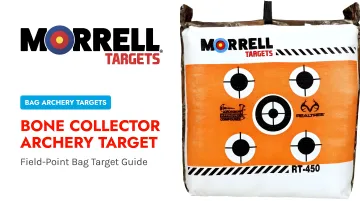
The Bone Collector is a licensed, broadhead-specific archery target measuring 22 x 20 x 18 inches, built with a 100% weatherproof shell. Unlike Morrell's field-point bag targets, this one exists for a single job: taking hit after hit from fixed-blade and mechanical broadheads without falling apart.
Broadhead blades cut differently than field points, and that distinction matters. According to Morrell's own product guidance, broadheads shot into standard field-point bag targets slice through the polypropylene material, making arrows tough to pull.
That cutting action shortens a standard target's usable life dramatically. A dedicated core material is needed to handle that kind of repeated stress.
The Nucleus Center Difference
At the heart of the Bone Collector sits the Nucleus Center — a dense rubber core wrapped in flex-back foam. The goal is straightforward:
- Stop arrows before they pass through
- Protect fletching from fraying or breaking on impact
- Hold its shape shot after shot, even under heavy hunting-arrow energy
This design traces back to founder Dale Morrell's original mission from the mid-1980s: build a target with easy arrow removal and real durability. He started that project in his garage as a brick mason with a passion for archery. Decades later, the same philosophy shows up in a target engineered specifically for broadhead abuse.
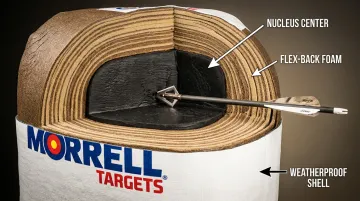
The EZ-Tote handle and compact footprint round out the package, letting hunters move the target from the backyard to the range to a treestand setup without much hassle.
Key Features & Technology That Set It Apart
Weatherproof Shell & Multi-Angle Shooting Surfaces
The Bone Collector's shell is built for year-round outdoor storage. That matters because unprotected foam doesn't age well outside.
A 2023 materials study on UV degradation found that UV exposure causes surface photo-oxidation and discoloration in polyurethane foams over time, and manufacturers routinely recommend coatings for any foam left exposed outdoors. Morrell's weatherproof shell is designed to shield the internal foam and rubber core from that kind of breakdown.
Weatherproofing keeps the target ready for daily use, but realistic practice matters just as much. Real hunting shots rarely come straight-on, and the Bone Collector's multiple shooting surfaces let you practice:
- Steep downward angles, like shots from a treestand
- Low-angle shots typical of ground-blind setups
- Standard level shots for basic sight confirmation
Practicing these angles before the season starts helps you catch arrow flight issues you'd otherwise discover for the first time on a live animal.
Broadhead Stopping Power, Shot-Count & Portability
The dense rubber-and-foam combination resists blow-through far better than a typical bag target. That's the entire point of the Nucleus Center. Less pass-through means:
- Less arrow damage from the target's internal frame
- Longer target lifespan
- Safer backyard and range sessions overall
The Archery Trade Association reinforces this point directly. Its range safety guide notes that broadhead cutting surfaces reduce target longevity and recommends a clearly labeled, manufactured broadhead target (or a dedicated broadhead pit) rather than repurposing field-point equipment.
On expected lifespan, Morrell markets the Bone Collector as capable of withstanding thousands of shots. That's a manufacturer claim without a published testing protocol, so treat it as a general benchmark rather than a guarantee.
For context, Field & Stream's 2025 archery target review puts average targets at a minimum of 2,000 arrows, with higher-end options reaching 10,000 to 30,000 shots depending on construction. Actual lifespan on any target still depends on shot volume, broadhead type, and impact placement.
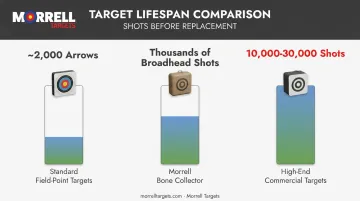
Durability only matters if you actually get the target out to shoot at it. The EZ-Tote handle and manageable weight mean you can shift the target between your backyard, a local range, or a treestand practice setup whenever you need to dial in your bow before opening day.
Why Broadhead Shooters Need a Dedicated Target Like This
Shooting broadheads into a field-point-only target creates a genuine safety risk beyond wasted material.
What happens with the wrong target:
- Excessive material tearing from repeated blade cuts
- Shortened target lifespan, sometimes after just a handful of sessions
- Increased chance of dangerous pass-through if the core can't absorb the impact
The ATA's range guide backs this up directly, stating that backstops need to stop arrows wherever they strike and that broadhead use should be confined to targets built for that purpose. This is a foundational safety principle for any range or backyard setup.
The Practice Value Goes Beyond Safety
Shooting your actual hunting broadheads (not just field points) before season matters for one simple reason: broadheads fly differently. Fixed-blade and mechanical heads carry different weight distributions than field points, and that difference shows up in arrow flight at distance. A target like the Bone Collector, built to handle broadhead impacts, lets you:
- Confirm your sight settings match your actual hunting setup
- Build real shot confidence with the equipment you'll use in the field
- Catch tuning issues caused by broadhead weight before they cost you a shot on game
Who This Target Is Really For
- Bowhunters finalizing pre-season setups who need broadhead-specific practice
- 3D league shooters and competitive archers refining accuracy under match-like conditions
- Archery program participants moving from field points toward hunting equipment
NASP tournament rules currently specify standard 60-grain cone points only, so this transition happens outside formal program structure.
Bone Collector vs. Other Morrell Targets: Finding Your Fit
Morrell builds targets across several categories, and picking the right one comes down to what you're actually shooting and how often.
| Target Type | Best For | Broadhead Compatible? |
|---|---|---|
| Yellow Jacket bag targets | Field points, casual backyard practice | No |
| Bone Collector | Fixed and mechanical broadhead practice | Yes |
| Commercial-grade compression targets (like BOA Compression 48) | High-volume range or dealer use | Varies by model |
The Yellow Jacket line is built for field points and general practice. Shoot broadheads into these and you'll cut through the polypropylene shell fast, exactly the scenario Morrell warns against in its own product guidance.
Morrell's commercial-grade compression targets serve a different customer entirely: ranges and dealers absorbing hundreds of shots per week from multiple archers. The Bone Collector is sized and priced for personal use, not commercial volume.
A Simple Decision Framework
Ask yourself:
- What am I shooting? Broadheads point you toward the Bone Collector; field points only call for a Yellow Jacket bag target.
- How often will I shoot? Occasional backyard tuning suits the Bone Collector, while daily range traffic calls for commercial-grade construction.
- What's my draw weight and arrow speed? Check your target's labeling for recommended specs before shooting.
- What's my budget? Broadhead-rated cores cost more to build than standard bag targets, and that shows up in price.
Morrell targets across its lineup are also largely rebuildable, with replacement covers and parts sold separately for many models. That means when wear does show up, you're often looking at a cover swap rather than a full replacement purchase.
Setup, Care & Maintenance Tips for Maximum Lifespan
Even a weatherproof target benefits from proper setup and a little extra care.
- Position it on level ground with a clear backstop. Keep it at least 10 yards downrange before your first shot.
- Store it covered when possible. The Bone Collector is built to handle outdoor exposure, but a garage, shed, or tarp during off-season months adds years to its usable life.
- Use the twist-and-pull method for arrow removal. Twisting the shaft as you pull works with the foam core's natural give, reducing tearing around the entry point.
- Rotate your shot placement. Concentrating every shot on one small area wears down that spot fast. Spread impacts across the face to preserve the core's integrity longer.
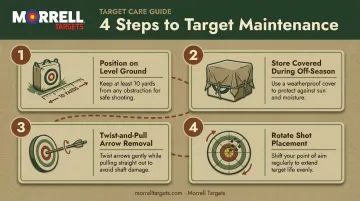
These habits cost nothing and add real years to the target's practical lifespan.
Buying Guide: Where to Buy & Warranty Support
You can purchase the Bone Collector directly through Morrell or through authorized archery dealers and sporting goods retailers. Pricing sits above basic field-point bag targets, which makes sense given the specialized Nucleus Center core, but it's a fraction of what you'd spend replacing a shredded budget target every season.
Why the price difference is worth it:
- Absorbs high-impact hits that would shred a standard field-point bag target
- Cuts long-term costs by requiring fewer replacements over time
- Extends target life with replacement covers and rebuildable parts, so a worn target doesn't mean a full repurchase
Morrell has manufactured targets in the USA for over 40 years, and that track record shows up in its customer support approach. For specific warranty terms or current pricing on the Bone Collector, contact Morrell directly at 800-582-7438 or info@morrelltargets.com.
Frequently Asked Questions
What is a Bone Collector broadhead target used for?
It's built specifically for practicing with fixed and mechanical broadheads without the excessive tearing and pass-through you'd get from a standard field-point target. It's meant for pre-season tuning and confidence-building with actual hunting arrows.
Can I shoot both fixed and mechanical broadheads into the Bone Collector target?
Yes. The dense rubber Nucleus Center is designed to handle both broadhead types, resisting blow-through better than typical bag target foam.
How long does the Morrell Bone Collector target last?
Morrell says it's built to handle thousands of broadhead shots, though actual lifespan varies by shot volume, broadhead style, and storage conditions. Rotating shot placement helps extend that lifespan further.
Is the Bone Collector target weatherproof for outdoor storage?
Yes. It features a 100% weatherproof shell suited for outdoor storage year-round. Covered or indoor storage during off-season months still adds extra years to its usable life.
What size is the Morrell Bone Collector target?
It measures 22 x 20 x 18 inches, a compact footprint that works well for backyard tuning, range sessions, or portable treestand practice setups.
How do I remove arrows easily from the Bone Collector target?
Use a twist-and-pull motion rather than a straight yank. The flex-back foam and dense rubber core release arrows more easily when you twist first, reducing wear around each entry point.