Introduction
You're three weeks out from opening day, standing in your backyard, staring at a round bullseye target you've shot a thousand times. It's telling you nothing about whether you can drop an arrow into a deer's vitals from a tree stand at a quartering angle.
That's where doe targets come in. These are archery targets shaped and marked to simulate a female deer, built specifically for shot placement practice before hunting season.
Many archers train exclusively on flat, circular targets and then wonder why their first real shot at a deer feels unfamiliar. This blog breaks down what doe targets are, why they matter, the different formats available, and how to pick one that fits your practice routine.
Key Takeaways
- Doe targets simulate deer anatomy and vital zones, unlike standard bullseye targets
- 3D foam targets offer lifelike realism; bag-style targets stay affordable and portable
- Match your target's point rating (field point or broadhead) to your equipment for safety
- Rebuildable targets with replacement covers cut long-term costs significantly
What Are Doe Targets?
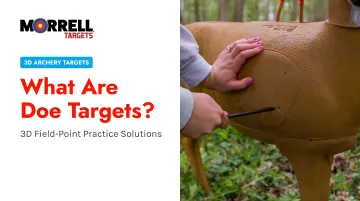
A doe target is an archery target built to replicate the shape, size, and vital zone placement of a female deer. Bowhunters use them to rehearse real hunting scenarios before ever drawing back on a live animal.
The word "doe" matters here. Doe targets typically lack antlers, mirroring the deer most hunters actually encounter and harvest across much of the whitetail range. Buck targets, by contrast, usually include antlers (sometimes even a locking-antler feature for realism) and show up more often in competitive 3D archery courses.
Two Common Formats
Doe-style deer targets generally fall into two categories:
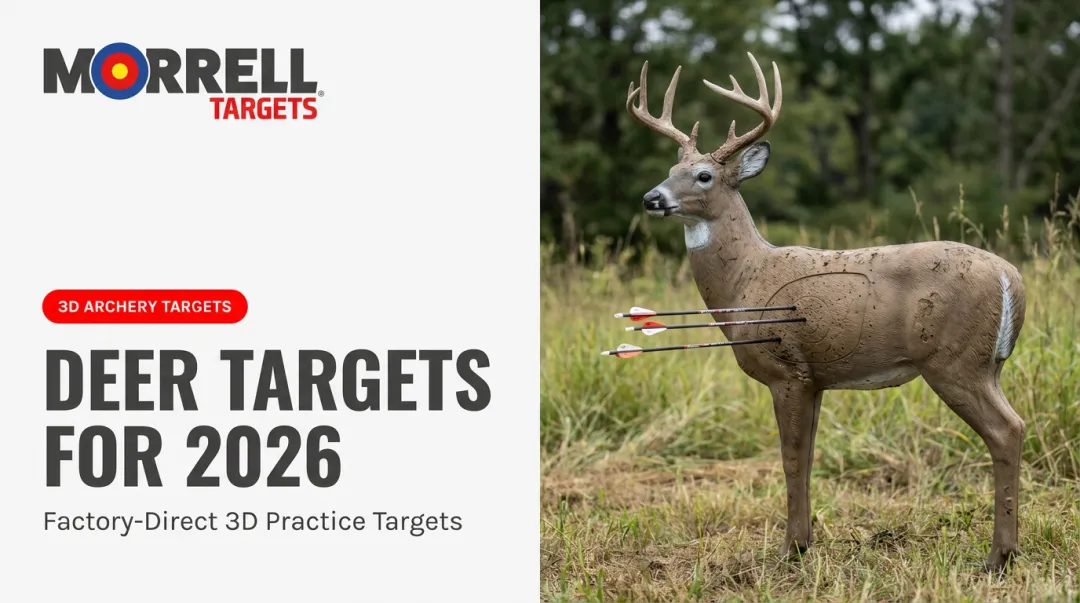
- 3D foam deer targets – Life-sized, anatomically shaped foam bodies that stand upright and mimic a deer's real silhouette from any angle
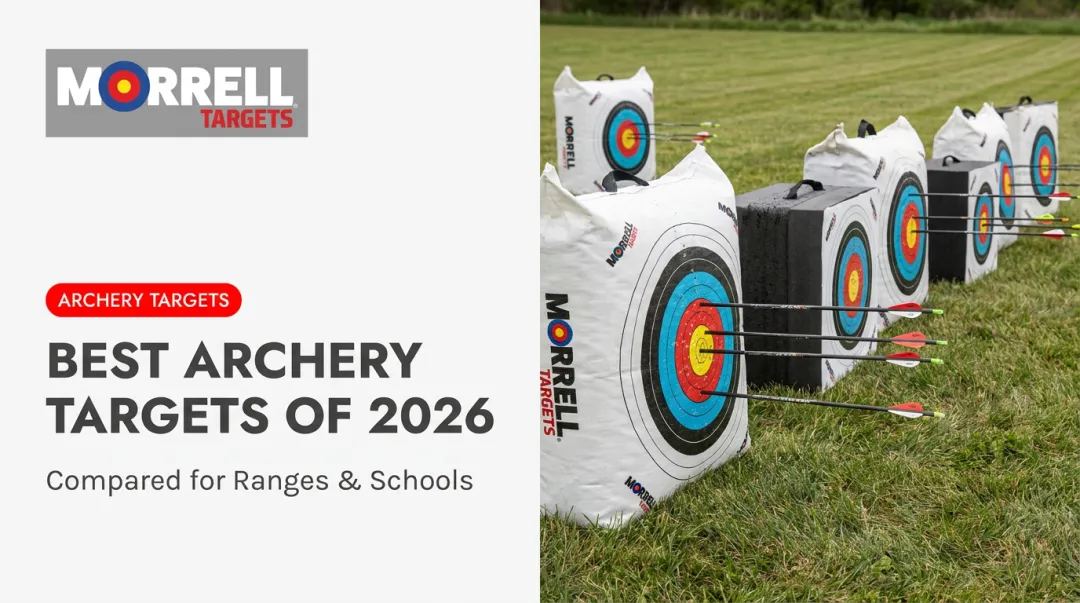
- 2D/bag-style deer silhouette targets – Flat or block-shaped targets with a printed deer image, offering quicker setup and easier transport at a lower price point
Both formats typically feature a marked or molded vital zone, representing the heart, lung, and liver area a bowhunter should aim for. According to Bowhunter magazine's shot placement guide, that exposed target zone shifts depending on the animal's body angle.
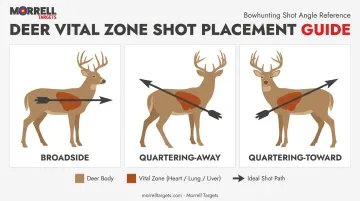
That's exactly why a flat bullseye can't teach what a 3D or angled silhouette target can.
Doe targets aren't reserved for expert hunters, either. Youth archers in NASP-style school programs, first-time bowhunters, and veteran hunters doing pre-season tune-ups all use them, just at different distances and skill thresholds.
Benefits of Using Doe Targets for Bowhunting Practice
Shooting a round bullseye teaches you to group arrows. It doesn't teach you where a deer's vitals actually sit when the animal is standing at a 45-degree angle in low light. That's the gap doe targets fill.
Doe targets offer several concrete advantages over standard bullseyes:
- Muscle memory built for the real thing. Repeated practice on a deer-shaped target trains your brain to recognize vital zone placement instantly, instead of translating a flat paper circle into 3D anatomy under pressure.
- Distance and angle judgment. A 3D deer form looks different broadside than it does quartering-away, and doe targets let you rehearse both. That's a skill round targets simply can't teach.
- Confidence in ethical shot placement. Consistently hitting a defined vital zone builds shot confidence that translates to better decisions in the field.
Doe targets also serve as a bridge for younger and newer archers. Programs modeled on NASP training often introduce animal-form targets once students have mastered paper bullseyes, helping them transition toward field-realistic practice.
The Numbers Behind the Practice
Archery participation is bigger than most people realize. A 2025 USFWS addendum to the National Survey of Fishing, Hunting, and Wildlife-Associated Recreation estimated 18.8 million Americans age 6 and older participated in archery during 2021.
A separate look at real-world bowhunting performance adds context. A Maryland study (Pedersen, SEAFWA) tracked 161 bowhunters over the 1989-2006 seasons, recording 908 deer hit, with 746 recovered within 24 hours (82% recovery rate) and 162 unrecovered (an 18% wounding rate).
The researchers pointed to bowhunter education, proficiency testing, and practice on life-size 3D targets as likely contributing factors, though they didn't isolate practice frequency as a standalone cause. Still, it's a reasonable signal that realistic, anatomy-based practice belongs in a serious hunter's routine.
Types of Doe Targets Available
Not all doe-style targets are built the same, and the differences affect both price and longevity.
3D foam doe targets are full-body, self-healing foam constructions. The foam absorbs an arrow and closes back around the hole, so the target keeps performing shot after shot.
They're the most realistic option and typically the most expensive. Many models include replaceable vital-zone inserts, so you're not rebuilding the entire target once the core area wears out.
Bag-style deer silhouette targets trade a bit of realism for practicality. They're fabric-covered, densely packed, and considerably lighter and more affordable than full 3D foam models. If you're setting up in a backyard or hauling a target to a friend's property for a weekend session, bag-style wins on convenience.
Some archers skip the full 3D purchase altogether and instead add a deer vital-zone insert or replaceable core to an existing bag target. Morrell Targets builds several of its bag-style products around rebuildable designs, including replacement covers for models like the YJ-400, which features deer vitals on one side and a standard bullseye on the other.
That two-in-one design lets you switch between form practice and anatomical practice without owning two separate targets.
Match the Target to Your Arrow Tip
This is where a lot of archers get tripped up. Field-point-only targets and broadhead-compatible targets are not interchangeable.
- Bag targets are commonly rated for field points only, since broadhead friction can generate enough heat to bond the head to the target material
- 3D foam targets with a denser core, or models like Morrell's Transformer Buck, are built to handle both
- Shooting the wrong tip into the wrong target shortens its life fast and can create a safety hazard from arrow pass-through or deflection
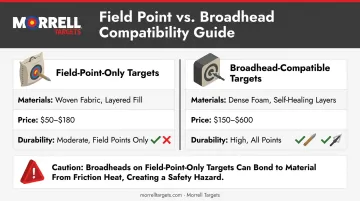
Always check the manufacturer's stated rating rather than assuming compatibility based on shape or material.
How to Choose the Right Doe Target
Picking the right doe target comes down to three practical questions.
What are you actually shooting? If you split time between field points and broadheads, look for a target explicitly rated for both, or plan to own two targets built for their specific purpose. Mixing tip types on a target not designed for it accelerates wear and can be unsafe.
Will you need to rebuild it? Targets take a beating over a season. Favor models with:
- Replaceable covers (like Morrell's Kinetic 1.0 replacement covers)
- Replaceable vital-zone inserts on 3D foam models
- An internal frame system that holds up after hundreds of impacts
This one factor can be the difference between replacing a $30 cover and buying an entirely new target every season.
How will you store and move it? Archers who shoot at multiple locations, attend 3D shoots, or don't have permanent range space should prioritize lightweight, portable options over bulky full-body 3D forms. Bag-style targets pack down easily; full 3D foam bodies generally stay put.
Doe Targets vs. Other Archery Target Types
Doe targets and standard bullseye or block targets serve different jobs in a training program.
| Target Type | Best For | Limitation |
|---|---|---|
| Doe/deer 3D | Anatomy, body angle, hunting simulation | Larger, less portable, pricier |
| Buck 3D | Same as doe, plus antlered visual realism | Antlers don't change vital location |
| Bullseye/block | Form, grouping, sight-in accuracy | No animal anatomy or angle practice |
| Bag-style | Portable, high-volume field-point reps | Often field-point only |
Doe vs. buck: The core difference is antlers. Buck targets include them and show up frequently in competitive 3D courses scored on anatomical realism, while doe targets represent the deer most hunters actually pursue.
Doe/animal vs. bullseye: Bullseye targets build the fundamentals: consistent form, tight groups, repeatable aiming. Doe targets add the layer bullseyes can't: locating vitals on a body that isn't facing you head-on.
Most serious archers use both. Archers typically shoot bullseye targets early in the off-season to dial in form, then move to doe or deer-form targets closer to the season to rehearse realistic shot angles.
Tips for Using and Maintaining Your Doe Target
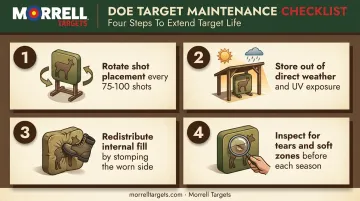
A little maintenance stretches your doe target's life by seasons, not weeks.
- Rotate your shot placement. Focusing every arrow on the same vital-zone spot wears through material fast. Morrell recommends rotating your target every 75-100 shots.
- Store it out of the weather. Bag and foam targets are often weather-resistant, not weatherproof. Extended UV exposure fades facing and dries out foam over time.
- Redistribute internal fill. For bag-style doe targets, placing the worn side face-down and stomping the back can push fill material into thin spots.
- Inspect before every season. Check for compaction, tears, or soft zones. Swap just the cover or core, not the whole target, for a cheaper fix that keeps a good frame in service longer.
Frequently Asked Questions
What is the difference between a doe target and a buck target?
Doe targets lack antlers and represent the more commonly hunted female deer, while buck targets include antlers and often appear in competitive 3D archery courses scored for anatomical realism.
How far should I stand from a doe target when practicing?
Beginners typically start at 10-20 yards and increase distance gradually as accuracy improves, mirroring realistic hunting shot distances rather than jumping straight to long range.
Can doe targets be used for both bow and crossbow practice?
Most bag-style and 3D foam doe targets work for both compound bows and crossbows, but always check the manufacturer's stated speed or energy rating first. Some Morrell models, for example, list ratings up to 500 FPS.
How long do 3D or bag-style doe targets typically last?
Lifespan depends on material quality and how many shots the target absorbs each season. Rebuildable targets with replacement covers or cores can extend usable life considerably compared to non-rebuildable models.
Are doe targets used in NASP or school archery programs?
NASP's core bullseye curriculum uses an 80 cm scoring face at 10 and 15 meters, but many programs introduce deer-style targets separately for supplemental hunting-readiness training.
What is the best material for a doe target: foam or bag-style?
Foam suits broadhead practice and delivers the most realistic 3D form, while bag-style targets are lighter, more affordable, and easier to transport for field-point practice.